
Mayor Zohran Mamdani and Corporation Counsel Steven Banks meet with New York City Administrative Judge Shahabuddeen Ally in Brooklyn Housing Court. Photo via NYC Mayor/X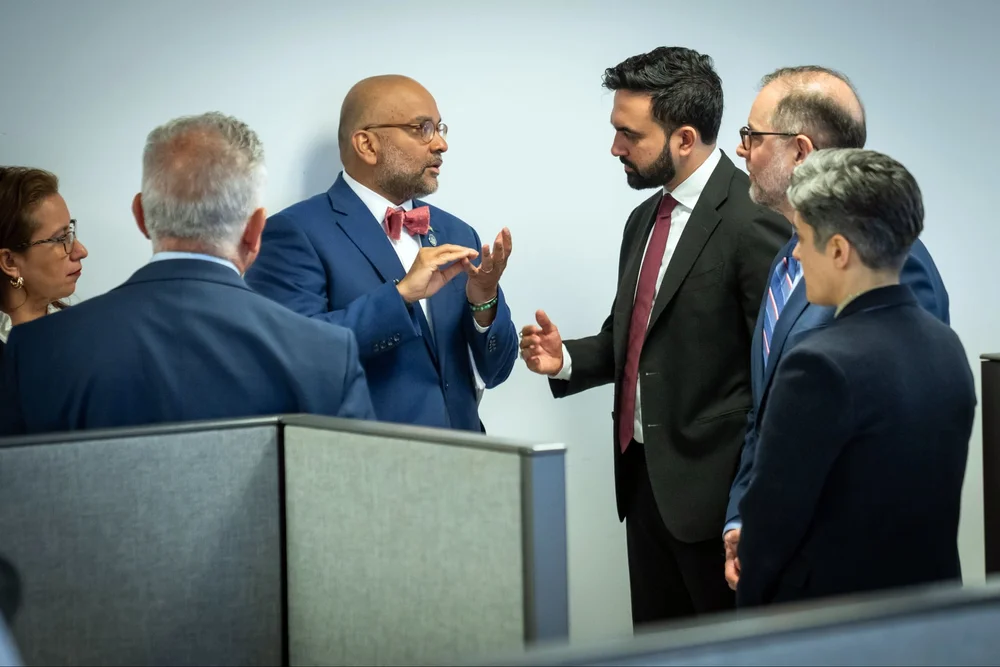
By Noah Powelson
For 20 years, Wanda Martinez said she watched her rent-stabilized Jackson Heights apartment deteriorate as her landlord refused to address the worsening conditions.
Martinez and her neighbors said their building regularly had mold, broken windows and broken elevators, which often trapped senior tenants inside the building.
But in 2022, the nonprofit Catholic Migration Services approached Martinez and asked her to be a leader of a tenant association for her building and help bring a lawsuit against their landlord. Martinez and CMS organized her neighbors and compelled their landlord in court to start repairs. Within the year, Martinez said, repairs began.
“We happen to be a success story, because we went in and we won our case,” Martinez told the Eagle. “Up to this day, things are functioning so much more the way they are supposed to function….We pay for the services they’re supposed to render, and when they don’t, we should have the right to bring them to court.”
While Martinez’s situation ended in success for the tenants, it’s a story tenant organizers say is far too rare as the city tries and fails to fix the Right to Counsel program, a 2017 law that guarantees legal representation to eligible New Yorkers facing eviction.
Outside Brooklyn Housing Court on Monday morning, tenant organizers and legal aid attorneys led a rally on the courthouse sidewalk as Mayor Zohran Mamdani and City Comptroller Mark Levine toured inside. Tenants, organizers and attorneys told stories of landlord neglect and abuse, in which they were regularly served with eviction notices as they dealt with mold, lack of heat, inaccessible ramps and a plethora of other issues.
The groups, which included the Right to Counsel Coalition, Housing Organizers for People Empowerment, Community Action for Safe Apartments and others, called on the mayor to allocate an additional $350 million to the RTC program.
According to advocates, the program is severely underfunded, leaving attorneys with piling caseloads and New Yorkers struggling to find representation.
Chris Brown, a tenants’ rights lawyer for the New York Legal Assistance Group, said tenant advocates and legal services organizations regularly have to tell eligible tenants the organizations don’t have the resources to take on more cases.
“There is an eviction crisis in New York City that gets worse and worse every year, despite the fact that tenants are supposed to have the right to counsel,” Brown said. “A successful Right to Counsel program requires full funding, $350 million to increase the capacity of legal service providers, and leadership from the city to defend NYC tenants’ rights to legal representation to the state courts.”
The groups also called on the state legislature to pass three tenant protection bills that currently sit in committee.
Advocates called on legislators to pass the Clean Hands Act, which would prevent landlords from suing tenants for evictions while there are still hazardous violations in the tenant’s apartment or building common areas.
Wanda Martinez, a tenant organizer for her apartment building in Jackson Heights, tells rally attendees of her organization’s successful lawsuit for repairs against their landlord. Eagle photo by Noah Powelson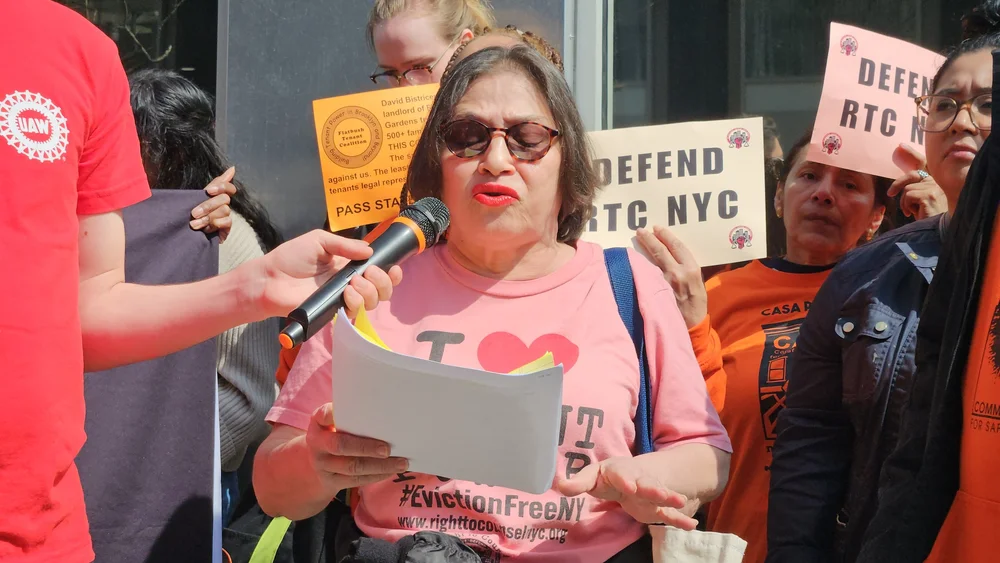
They also voiced support for the Winter Moratorium on Evictions Act, which would prohibit evictions from taking place between Nov. 1 and April 15. Queens State Senators Leroy Comrie and Julia Salazar have both signed on as co-sponsors of the bill.
Advocates also called on the state to pass a Statewide Right to Counsel bill, which would bring New York City’s landmark eviction protection law to the rest of the state.
During the rally, organizers called on the mayor to stand with them and their demands as he toured the courthouse, but Mamdani did not make an appearance. Mamdani and Levine left shortly after their tour concluded.
Later that day on the social media platform X, Mamdani spoke about his visit to Housing Court and said he spoke with Chief Administrative Judge Joseph Zayas and New York City Administrative Judge Shahabuddeen Ally about the issues the court faces.
“Housing Court is where the promises we make about dignity, stability and public excellence are tested in real time,” Mamdani said. “In the months ahead, my team will work closely with the Chief Judge and the Chief Administrative Judge to confront the concerns we heard — directly from judges, tenants, landlords, legal service providers, and advocates.”
While Mamdani didn’t appear before advocates on Monday, the city’s corporation counsel, Steven Banks, spoke briefly during the rally.
“We are committed to working with you to address the kinds of problems that the courts, the landlords, the tenants, the advocates and the legal service providers say every day,” Banks said, speaking to tenant advocacy groups outside Brooklyn Housing Court.
RTC was first passed by the city in 2017 and established guaranteed access to legal representation for New Yorkers facing eviction as long as their household’s annual income does not exceed 200 percent of the federal poverty guidelines. RTC saw massive expansion during the pandemic, but has struggled to pay for the attorneys and resources needed to meet growing demand.
A 2025 report for the city comptroller’s office found that RTC representation dropped staggeringly in the years since its enactment even though program eligibility remained relatively high.
Only four out of 10 New Yorkers facing eviction had legal representation from 2021 to 2024, the report found. The report also found there have been 37,000 court-ordered evictions since January 2022.
A 2025 report from New York City’s Independent Budget Office also found that while around 50 percent of tenants in Housing Court had representation in 2022, that number dropped to just 35 percent in 2024. According to the IBO report, eligibility for RTC representation grew by 110 percent from 2022 to 2024, but government funding for RTC only grew by roughly 33 percent in that same time.
As RTC’s future funding and reach remain up in the air, tenants like Martinez will continue to rely on the efforts of other nonprofits to help them navigate Housing Court.
Martinez herself facilitates an eviction workshop in Queens which helps tenants without legal representation, providing information and resources to help them with their cases. Martinez said that laws like the Clean Hands Act and the Winter Eviction Moratorium would help people like herself and her neighbors stay in their homes during difficult times.
“The stress and the trauma that these people and families have had to endure dealing with this situation is horrific, and you can see it and feel it in their faces,” Martinez said during the rally. “Statewide Right to Counsel, Clean Hands and the Winter Eviction Moratorium would help to level the playing field for our tenants in Housing Court.”
